Travel Cribs & Playards
 High Chairs
 Health & Safety


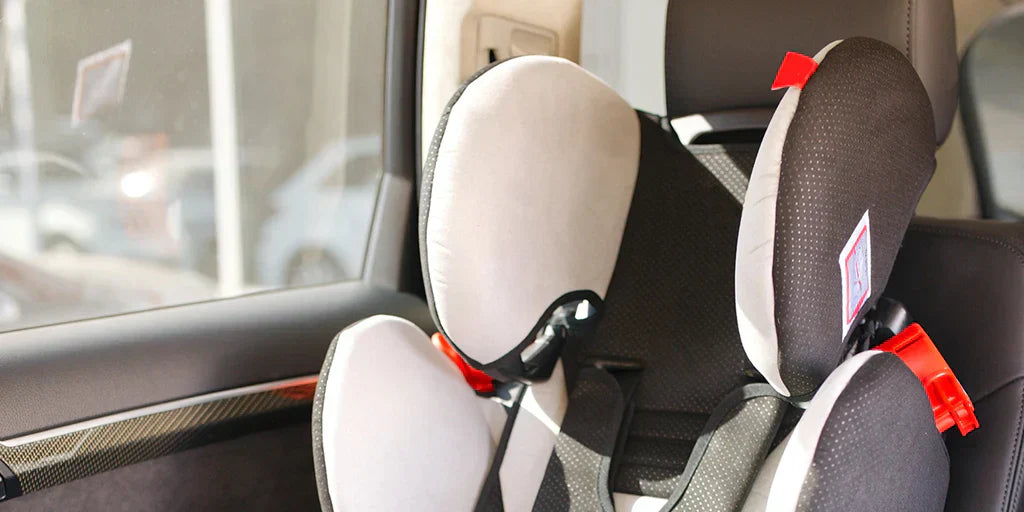
Car safety is one of the most important considerations for parents with young children. A crucial component of this safety is the proper installation of car seats. While many parents may be familiar with using lower anchors and seat belts to secure car seats, a top tether is often overlooked. In fact, using the top tether is arguably the single most important step for a forward-facing car seat that parents frequently miss.
This article will explore what a top tether is, why it is important, and how to properly use it to ensure your child’s safety while traveling in a car.
What Is a Top Tether?
A top tether (you may also see them called tethers, top tether straps, or top straps) is attached to the back of a forward-facing car seat. It’s a long belt strip with a hook or clip on the end that connects a convertible, all-in-one, or combination harness-to-booster car seat to a tether anchor point in your vehicle. Your car seat’s tether may be a single or double strap shaped like a “V” (on Britax car seats, for example).
Think of it as a seat belt for the top part of the car seat itself. Just as lower anchors or a seat belt secure the base, the top tether provides a critical third point of contact, creating a stable tripod-like installation that dramatically reduces forward movement.
You should use your top tether whenever your harnessed car seat is forward-facing—you will not use the tether when your convertible or all-in-one car seat is in rear-facing mode. The primary purpose of the top tether is to prevent the car seat (and your child’s head) from moving forward in a car crash, reducing the risk of injury.
Why Should You Use a Top Tether?
Failing to use the top tether is a widespread car seat installation mistake: The Insurance Institute for Highway Safety (IIHS) estimates that parents only use the top tether about half the time. Parents and caregivers consistently reported that they didn’t understand how to use it and where to attach it.
Using the top tether is vital—it can prevent your child’s head from moving forward during a crash (a motion called head excursion) by up to six inches. During a frontal crash, an untethered forward-facing car seat will lurch violently forward and upward at the top. This motion puts immense stress on the child’s head, neck, and spine. That six-inch difference may mean the difference between your child sustaining serious head injuries from impacting the seat in front of them (or a side pillar) and sustaining minor (or zero!) injuries during a collision.
It's also important to know that use of the top tether is required by both vehicle and car seat manufacturers for all forward-facing harnessed installations in the United States and Canada.
What Is a Tether Anchor?
A top tether attaches to a top tether anchor (a metal bracket or belt webbing loop that’s part of your car’s LATCH system). It may be on the vehicle floor, ceiling, or behind bench seats in trucks or SUVs. Look for an anchor symbol or refer to your vehicle manual to identify the top tether anchor.
Does Your Vehicle Have Tether Anchors?
As of July 2025, it has been standard for over two decades. All vehicles—with the exception of convertibles and some heavy-duty trucks— manufactured after September 2002 must have at least three tether anchors that are clearly indicated with a top tether icon. It looks just like a ship’s anchor and may be stamped into plastic or on a fabric label.
Even in a new car, always check your vehicle manual, as not every seating position is required to have a tether anchor.
If you have an older model vehicle, contact the manufacturer to see if retrofitting your car with a tether anchor is possible. Lexus and Toyota have partnered with SafetyBeltSafe USA to help owners of pre-2001 models get anchors ordered and installed at local dealerships, for example.
Where Can You Find Your Tether Anchors?
We want to preface this by saying: Always refer to your vehicle manual for locating any part of your car’s LATCH system. These are general guidelines for finding tether anchors according to your vehicle type.
Sedans
Sedan tether anchors are usually easy to find (and access).
The tether anchors are typically directly behind the seat on the shelf below the back windshield.
Routing the tether underneath the headrest can be difficult, especially if the anchor is deeply set on the back shelf. If it gives you trouble, remove the headrest for easier access—just remember to replace it or store it safely once you’ve tightened the strap.
SUVs and Minivans
Tether anchors are most often found on the rear seatbacks or the floor behind the seatback in most SUVs and Minivans.
Tether anchors can be located far down on the seatback, so don’t be alarmed if you have to extend the strap. A lot.
In some minivans and SUVs with third rows, the anchor may be under the seat itself (especially with captain’s chairs). Because only three anchors are required, there may be seats without tether anchors—avoid installing your car seat in those spots.
Some minivans and SUVs have anchors on the rear door frame, above or below your trunk opening.
Minivans and SUVs with third-row seats may have anchors at the back of the cargo area.
Crucially, don’t mistake cargo hooks or tie-downs for tether anchor points; if you’re unsure, don’t use them. Refer to your vehicle manual and always look for the top tether anchor icon.
Pickup Trucks
Pickup trucks tend to be trickiest—the anchors are harder to find, and securely connecting the tether can be challenging. Because of that, have your vehicle manual handy during installation and read it carefully.
Tether anchors are occasionally behind the rear seat in a truck, and you’ll need to tilt the seat forward to reach the anchor (while holding the car seat at the same time). You may need to get the tether as tight as possible before returning the seatback to its original position because the adjuster may be out of reach.
Most trucks have anchors on the back wall of the cab, but instead of a metal bar, it’s a loop of seat belt webbing. Your vehicle manual will show a specific routing path, often requiring you to thread the tether through the loop directly behind the car seat and attach it to the loop behind the next seat over.
How to Correctly Attach and Tighten the Top Tether (Step-by-Step)
1. Install the Car Seat First: Fully install the forward-facing car seat using either the vehicle seat belt or the lower anchors according to your car seat manual. The seat should move less than one inch at the belt path when you test it.
2. Locate Both Ends: Find the tether strap on the back of your car seat (it might be in a storage pocket) and locate the correct tether anchor in your vehicle for that seating position.
3. Route and Connect: Route the tether strap under your vehicle's headrest and connect the hook to the designated tether anchor. Ensure the strap is not twisted.
4. Remove the Slack: Once connected, pull the tail of the tether strap to tighten it. The strap should be taut, like a tight guitar string. It should remove the forward-and-back "wobble" from the top of the car seat, but it should not be so tight that it lifts the base of the car seat off the vehicle seat cushion.
When Should You Use a Top Tether?
Some of the confusion surrounding top tether usage can likely be attributed to the LATCH acronym itself. LATCH stands for Lower Anchors and Tethers for Children, perhaps mistakenly giving parents the impression that the top tether should only be used with car seats installed in the lower anchors. In reality, the tether should be used with any forward-facing harnessed car seat, whether the installation method is the vehicle seatbelt or the lower LATCH anchors.
If you’re using a 5-point harness, remember that your vehicle’s LATCH system has a weight limit (and it’s probably less than you think it is). Once that weight limit is reached, your car seat should be installed with a seat belt and top tether until the harness is no longer used and your child has graduated to a belt positioning high back booster seat.
Why NOT Use a Top Tether for Rear-Facing?
Rear-facing car seats are designed to protect a child in a completely different way. In a frontal crash, a rear-facing seat "cocoons" the child, and the forces are spread across the entire shell of the car seat as it rotates down and into the vehicle's back seat. Using a top tether in this situation would prevent that life-saving motion. Always follow your manual, but virtually all American-style car seats prohibit top tether use in rear-facing mode.
Are Top Tethers Used with Booster Seats?
Combination seats (forward-facing only harness seats that convert to high back belt positioning booster seats) have top tethers that are a safety feature when used with the harness. You’ll want to continue using the tether once you’ve converted to a high back booster, but it’s not a primary safety feature for your little rider (the vehicle seat belt is doing that job now). Instead, the top tether and LATCH connectors protect other passengers by preventing the unoccupied car seat from becoming a projectile during a collision.
Top Tether Do's and Don'ts
- DO make sure to remove the top tether strap from its storage on the back of your seat before you install the car seat.
- DON'T twist your tether strap—if you’re having difficulty maneuvering the hook onto the anchor, try rotating the hook but not the strap.
- DON'T ever mistake cargo hooks for tether anchors.
- DO pull the tether strap tight after the rest of the seat is installed.
- DON'T ever connect two tethers to a single anchor.
- DO choose an outboard seat with a tether anchor over a center seat that does not have one.
- DO try having your older car retrofitted with tether anchors if possible. If not, rear-face your child to the maximum limits of your convertible car seat.
- DON'T "daisy-chain" or use any kind of extender on your tether strap. If it doesn't reach, you cannot use that seating position.
The top tether on a car seat is an essential component in ensuring your child’s safety on the road. By understanding its importance, proper usage, and common mistakes to avoid, you can significantly reduce the risk of injury to your child in the event of a collision. Always remember to consult the relevant manuals and consider seeking the help of a Child Passenger Safety Technician (CPST) for car seat installation. Parents can find a certified CPST in their area by searching the Safe Kids Worldwide network online. Safe travels!
Finding What’s Right for You
Albee Baby is the oldest family-owned specialty baby shop in the US, and we pride ourselves on providing our customers with the best assortment of baby products anywhere, at fair prices, always. We’re committed to being an inclusive resource for parents and hope you feel empowered to find the right baby gear for your family. Still have questions? Feel free to contact our baby gear experts at 877.692.5233 or [email protected].