Travel Cribs & Playards
 High Chairs
 Health & Safety


How to Shop for Rotating Car Seats: The Ultimate 2025 Guide
Convertible car seats will be one of your family’s bigger baby gear purchases—and will be used for years—so investing in a little research before you hit add-to-cart is worth it. The world of car seats can feel overwhelming, with a dizzying array of styles, features, and safety jargon. It's a decision that carries significant weight, both literally and figuratively. And if you’re considering a rotating car seat that’s newer to the American market, learning how to shop for them will really simplify the process.
To help you navigate this important choice with confidence, we’ve huddled with our baby gear experts and rounded up our favorite tips for how to shop for rotating car seats so you can pick the best option for your family.
What Is a Rotating Car Seat?
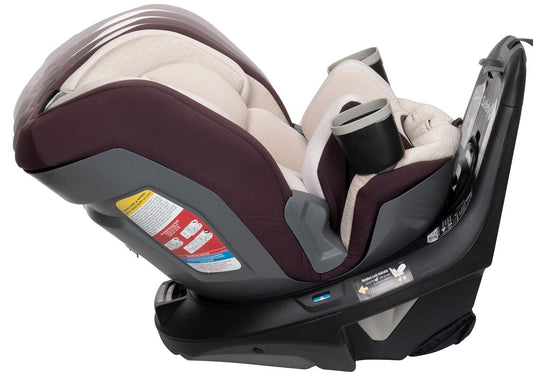
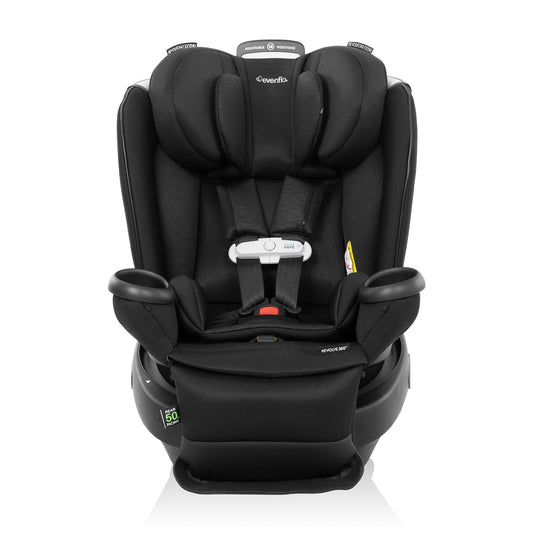
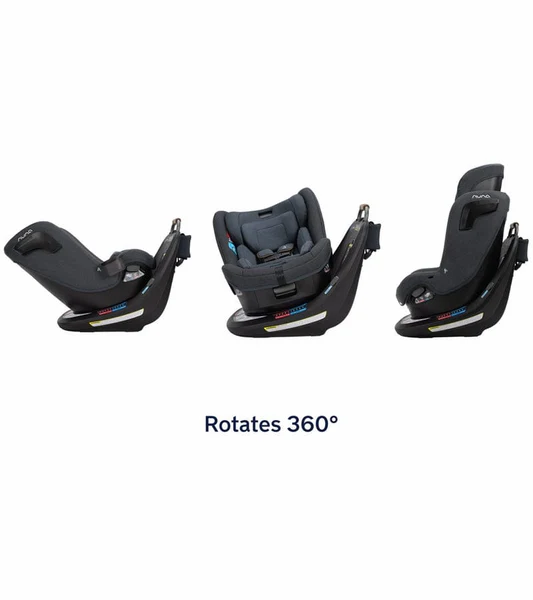
Common in Europe for years, rotating car seats—you may see them called swivel or revolving car seats—are a type of convertible car seat that can rotate or swivel so that your little one is able to face multiple directions. Veteran parents know that getting kids into car seats can be tricky, especially once they’re heavier and more mobile. Bending and twisting to buckle a wiggling toddler can be a daily struggle. Rotating car seats have been designed so that it’s easier to get your child in and out of the car seat, without straining your back (or requiring you to be a contortionist!).
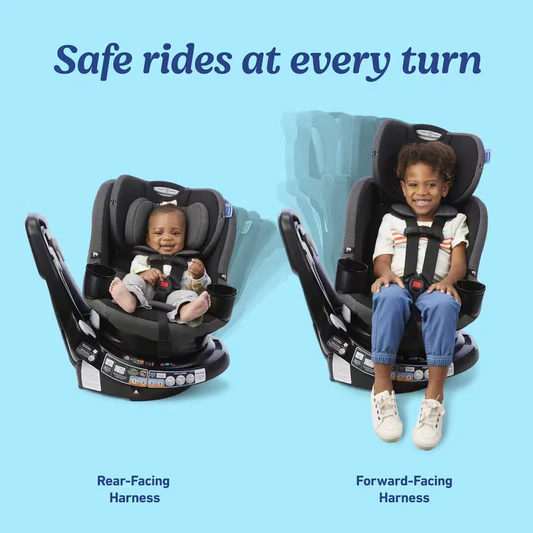
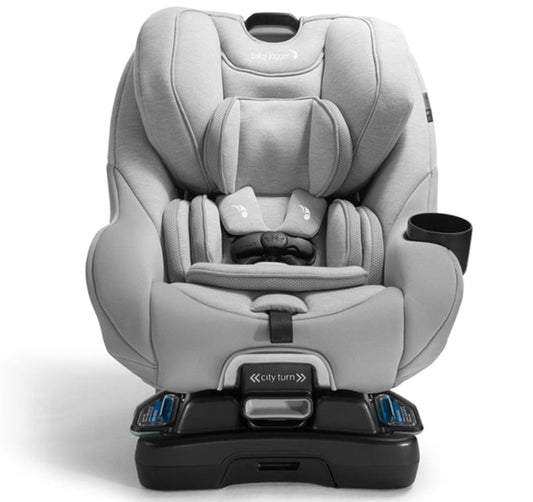
Similar to an infant car seat, rotating car seats have a base that is securely installed in your car, and the seat itself rotates or swivels on the base. The base has an integrated mechanism that allows the seat to turn towards your car’s door (or even between rear- and forward-facing, depending on the model). This means you can turn the seat to face you directly, place your child in the harness, ensure all the straps are snug and properly positioned, and then simply turn the seat back into the locked, travel-safe position. Once you’ve safely secured your child in the seat, it can be rotated back to the correct position.
Rotating car seats feature both 180° and 360° of rotation, depending on the model, and often feature bonus safety features like extra side impact protection, or load legs (a support strut that extends from the base to the vehicle floor to reduce crash forces).
The Crucial Question: Are Rotating Car Seats Safe?
This is the most important question for any parent, and the answer is a resounding yes. All new car seats must pass rigorous federal safety regulations set by the National Highway Traffic Safety Administration (NHTSA), including rotating car seats. Any car seat available to purchase in the US has met or exceeded all federally required safety standards. These standards include stringent crash tests that simulate both front-end and side-impact collisions to ensure the seat protects the child occupant effectively.
Beyond the federal baseline, it's critical to remember that the safest car seat is one that fits your child, fits your vehicle, and is used correctly every single time. The rotational feature does not compromise the seat's structural integrity when it is locked in the proper travel position.
Another (perhaps) unintended safety benefit of the rotating car seat? Extended use in the rear-facing position. The American Academy of Pediatrics (AAP), the National Highway Traffic Safety Commission, and scores of the nation’s leading pediatricians and researchers all recommend children rear-face for as long as possible, until they reach the maximum height or weight limit for their specific car seat model.
Because a rotating car seat makes getting a squirmy, irritable toddler into a rear-facing seat much easier, parents are more inclined to keep their kiddos rear-facing longer. This simple convenience factor can lead to a massive safety advantage over the long term.
Why Is Rear-Facing in a Car Seat Safer?
Simply put, riding rear-facing is the safest way for your kid(s) to ride in a car. The physics behind this are undeniable and directly linked to a young child's developing body. Rear-facing is safest for several reasons, including:
- Child passenger development and physiology. In a crash, all bodies in a vehicle move towards the point of impact—if you’re involved in a front-end collision, that means everyone will move towards the front of your car. Adults and children in forward-facing car seats will have their bodies held in place by a seat belt or a harness. And while the momentum of your body will be stopped quickly, your head will continue to be thrown forward until your chin touches your chest, and then it quickly whips back (whiplash). Babies, toddlers, and young children have proportionally larger heads and weaker neck muscles, so their heads move forward with more force than an adult’s, increasing the chance of a serious head, neck, or spinal cord injury.
- Extra protection for the head, neck, and spine. If you brake suddenly or are in a collision, rear-facing car seats provide better support to your child’s head, neck, and spine (the most vulnerable areas), and better distribute crash forces over a larger area. Think of it like this: in a forward-facing seat, the harness straps are like small nets catching your child's body, but the head and neck snap forward. In a rear-facing seat, the entire back of the car seat shell acts like a solid shield, cradling the entire body and preventing that violent forward motion.
- Reduction of crash forces. Rear-facing car seats better position your child’s back to be in direct contact with the car seat, helping to distribute the force of a crash evenly across the whole body. Vulnerable spots, like the head and neck, are less stressed and the risk of injury is reduced.
Worried your older toddler’s legs are squashed while rear-facing, and could be injured in a crash? Good news alert: there’s zero documentation of leg, hip, or foot injuries during collisions when the child is rear-facing in their car seat. Children are incredibly flexible and will happily sit with their legs crossed or propped up on the seat back, perfectly comfortable and significantly safer.
Is a Rotating Car Seat the Right Choice for Your Family?
A swiveling car seat is going to give any parent’s back a break, but they’re an especially great option for anyone with back or mobility issues, for shorter parents who drive trucks or SUVs, and for grandparents or older caregivers. They are also fantastic for parents with 2-door cars, where maneuvering a child into the back seat is already a challenge.
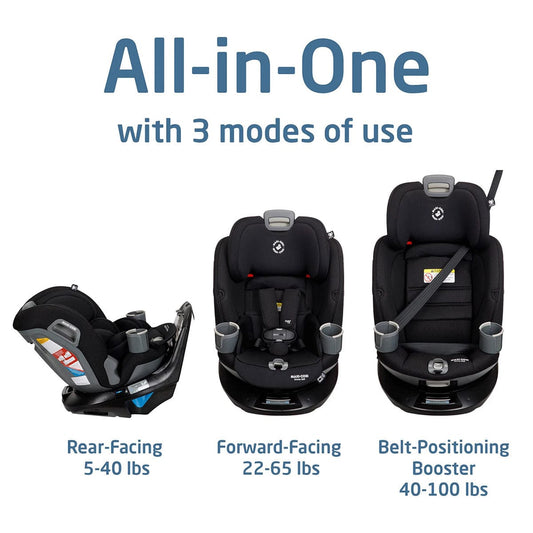
Because rotating car seats are a type of convertible car seat (the Orbit Baby G5 and Cybex Aton G Swivel being notable infant seat exceptions), they have the same basic usage: rear-facing for infants until height and/or weight limits are maxed out, and then forward-facing until your child meets the requirements for using a booster seat.
If you plan to use an infant car seat before transitioning to a convertible seat, once your child outgrows either the weight or the height restrictions, it’s time to switch to a convertible. Children will typically outgrow the height restriction first. This usually happens when there is less than one inch of space between the top of your child's head and the top of the car seat shell.
The Pros and Cons: Is a Rotating Car Seat Worth It?
Picking the best car seat for your baby is a big (and expensive) decision, and even more so with the convertible options: you’ll use your convertible car seat for years to come. Before committing to a rotating car seat, we suggesting rolling up the sleeves and making a pro/con list:
The Good Stuff (Pros):
- Extended rear-facing. This is the biggest safety benefit. Swiveling car seats make it easier to wrangle your peanut into a rear-facing position, making it more likely that your child rides rear-facing longer.
- Single installation. Traditional convertible car seats will need to be installed twice (once for rear-facing, and once for forward-facing). Most rotating car seats only need to be installed once, because the seat will swivel from rear- to forward-facing. (Note this applies to seat belt installations only. If you choose LATCH installation, your car seat and child will eventually exceed your vehicle’s lower anchor weight limits, requiring you to reinstall with a seat belt. Make sure to check your vehicle’s instruction manual for specifics.)
- Ease of use. Getting your little one into a rotating car seat is quicker, more convenient, and easier on the back than traditional car seats, especially if your child is rear-facing. This ergonomic advantage cannot be overstated, especially for caregivers with chronic pain, C-section recovery, or other mobility challenges.
The Less-Than-Good Stuff (Cons):
- Cost. Rotating car seats tend to be more expensive than traditional car seats. You are paying a premium for the complex engineering of the swivel mechanism.
- Lower rear-facing weight limits. While rotating car seats do make rear-facing easier, they also sometimes have lower rear-facing weight (and sometimes height) limits than some traditional convertible car seats. It’s likely your child will outgrow a rotating seat before they’d outgrow a traditional or all-in-one convertible car seat. Always compare the specific limits of the models you're considering.
- Size and Weight. The rotating seat needs space to swivel, so you may not be able to place it directly next to an additional car seat (or passenger). If you need to fit three seats across, your rotating car seat options may be limited. These seats are also significantly heavier than their non-rotating counterparts, making them difficult to move between vehicles. Some rotating car seats are long front-to-back, which may not work for tall drivers or families with compact cars.
How to Shop for Rotating Car Seats: Your 8-Point Buyer's Guide
Rotating car seats are big-ticket purchases, so finding the right one for your family can feel seriously high pressure. Every seat will have its own pros and cons, but shopping with these factors in mind will help guide your shopping journey (destination: the rotating car seat that’s perfect for you).
- (Your) Convenience. A car seat that can rotate towards the door is, without a doubt, seriously convenient for parents and caregivers trying to buckle a squirmy baby into place. Some rotating seats allow you to rotate the seat from rear- to forward-facing, eliminating the need to reinstall the car seat base. And if anyone in your family has mobility issues, a rotating car seat is a game-changer.
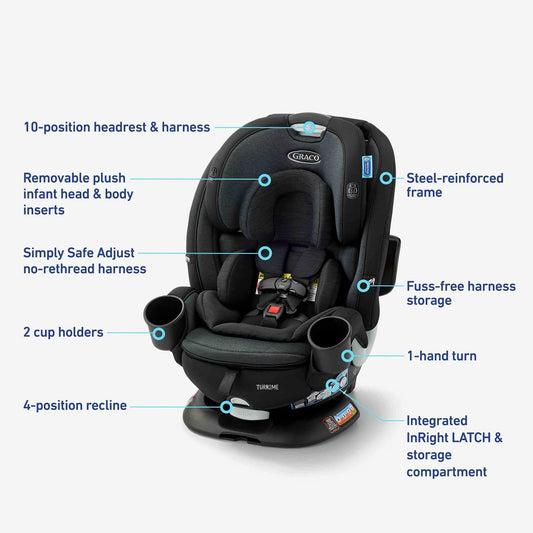
- Kiddo Comfort. Car seats that offer multiple points of adjustment—whether that be the recline angle, head support, or harness—will not only keep your child more comfortable while riding, it will also make it easier to achieve a safe and secure installation in a wider range of vehicles. Look for plush fabrics, padded inserts for infants, and good ventilation for warmer climates.
- Rotating Mechanism. The best rotating car seats swivel smoothly with just one hand (because your other hand will be holding a baby or a diaper bag!). Test this in a store if you can. Also keep an eye out for certain models that may require removing the tether while forward-facing before you can rotate the seat.
- Bonus Safety Features. Any rotating car seat on the market available for purchase has met or exceeded all federal safety regulations, but some offer extra safety features for added peace of mind. Depending on the model, the car seat may have energy absorbing foam, added side impact protection, a load leg, or integrated technology that alerts you to improper car seat use (like a chest clip that syncs with an app on your phone).
- Cost. Rotating car seats do tend to be more expensive than traditional convertible car seats, but there are options that will suit a range of budgets if this isn’t where you’d like to splurge. The Maxi-Cosi Emme 360, Graco Turn2Me, Evenflo Gold SensorSafe Revolve 360, and Safety 1st Turn and Go 360 DLX are all popular options.
- Weight & Height Limits. Rotating car seats often have lower rear-facing weight limits than traditional convertible car seats. You will be able to use any rotating car seat on the market right from day one, but keep in mind that you may need to switch to forward-facing sooner than you’d expect. Pay close attention to both the rear-facing and forward-facing limits to understand the seat's total lifespan for your child.
- Size & Vehicle Fit. The base of rotating car seats are bigger than those you’d find with an infant car seat, and the seats tend to be heavier than convertible car seats, as well. Rotating car seats need room to swivel, so if you need to fit three seats across they may not be the best choice. Before buying, measure your car's back seat. Check the front-to-back depth to ensure the front passenger or driver will still have adequate legroom.
- Installation Method. Every car seat has two primary installation methods: the vehicle seat belt or the LATCH system (Lower Anchors and Tethers for Children). While LATCH can feel simpler, it has a strict weight limit (usually 65 pounds combined child + car seat weight). Since rotating seats are heavy, you will likely need to switch to a seat belt installation sooner. Ensure you are comfortable with both methods by watching video tutorials for the seat you are considering.
Now that you’d pass the Albee Baby rotating car seats pop-quiz, hydrate and get ready to shop the Best Rotating Car Seats on the market today.
Finding What’s Right for You
Albee Baby is the oldest family-owned specialty baby shop in the US, and we pride ourselves on providing our customers with the best assortment of baby products anywhere, at fair prices, always. We’re committed to being an inclusive resource for parents, and hope you’re feeling empowered to find the right car seat for your family. Choosing a car seat is a journey, and we're here to support you every step of the way. Still have questions? Feel free to contact our baby gear experts at 877.692.5233 or by email at [email protected].